
Lina Machida
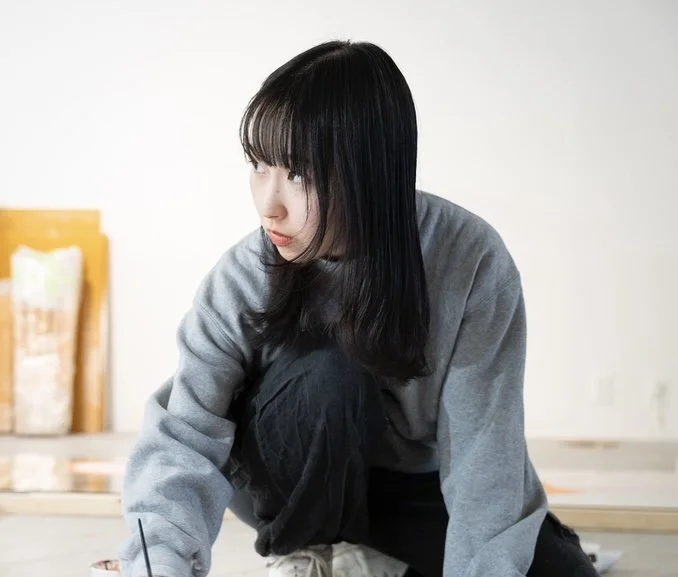
Photo credit: Kenji Agata
In Residence: November 2026 - January 2027
Lina Machida is an artist based in Tokyo working with moving images, animation, drawing, and spatial installation. Her practice explores subtle bodily responses that arise through contact with environment, time, and others—particularly moments of hesitation, delay, or loss of control. She is interested in situations where the body does not respond as intended, such as illness, or hands numbed by cold, and how these states emerge through relationships rather than as purely personal conditions.
Machida has presented her work in cinemas, museums, and art spaces in over 20 countries. She works across cinematic and exhibition formats, examining how moving images can function as embodied and spatial experiences. She is the founder of MOVOP, a platform dedicated to expanded forms of moving-image practice through screenings, curatorial projects, and publications. Machida studied Design and Animation at Tokyo University of the Arts and has been supported by the Kuma Foundation and Japan’s Agency for Cultural Affairs. Her work has been shown at venues and events including ART FAIR TOKYO, Roppongi Art Night, Festival of Animation Berlin, and the Goethe-Institut Villa Kamogawa.
During her residency at Artica Svalbard, Machida will begin a new project that explores bodily resistance and adaptation in extreme cold. Starting from the act of drawing with numbed fingers, she will create marks shaped by friction with the environment rather than intention—treating these traces as records of contact between body and climate. Observing subtle rhythms of light, wind, snow, architecture, and non-human life, she will develop moving-image work that emerges through sensory encounter rather than narrative construction. The residency will also include experimental printmaking, exploring how incised lines can register time, motion, and environmental conditions. Together, these processes form an inquiry into reciprocity between body and landscape, where animation becomes a trace of having encountered—and stayed with—the Arctic environment.