
Aindreas Scholz
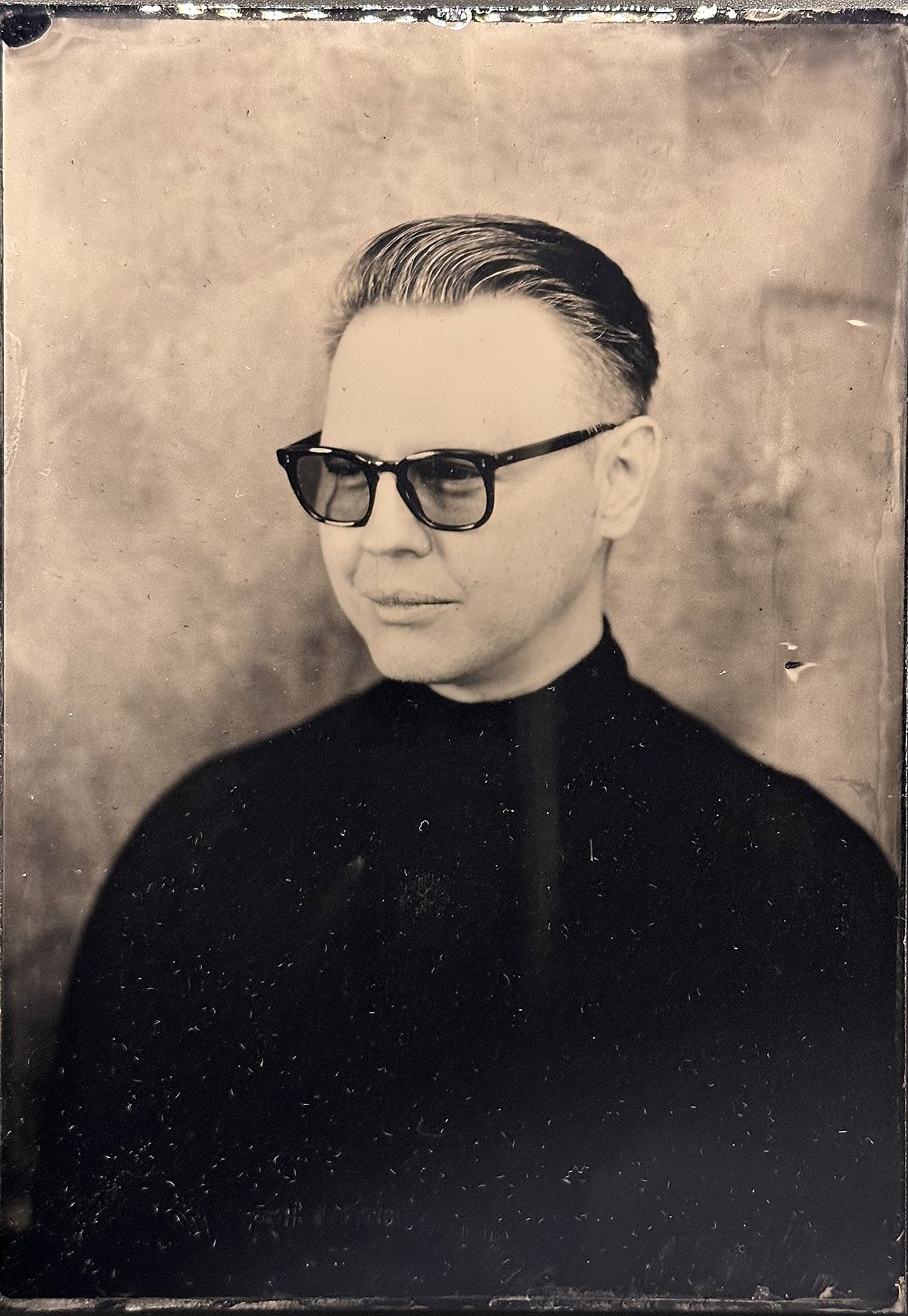
Photo credit: Magda Kuca
In residence: July - August 2026
Aindreas Scholz (b. Germany/Ireland) is a German-Irish photographer based in London, working with cameraless and ecological photographic processes. His practice focuses on climate-adapted image-making that collaborates with sunlight, water chemistry, and plant matter, inviting rain, seawater, salinity, and disturbed soils to physically imprint the photographic surface. His works sit between aesthetics and evidence — photographs that function as material traces of place, contamination, and environmental vulnerability.
Scholz studied photography at Technological University Dublin, completed postgraduate study in fine art at Goldsmiths, University of London, and trained as an educator at University College London. He is represented by In-Dependance and has exhibited widely across the UK and Europe in solo, two-person, and group exhibitions focused on analogue and sustainable photography. His practice has been supported by Arts Council England and the Paul Mellon Centre, and his work is held in public collections including the Office of Public Works (Ireland) and NHS Foundation Trusts (UK).
Alongside his studio practice, Scholz lectures and leads workshops on sustainable analogue and historical photographic processes. Rather than treating climate change as an image problem, he approaches photography as a material system that can be reworked — a practice of testing, measuring, and taking responsibility for chemistry, water, and waste. His ongoing projects ask what it would mean for photographic practice to become a form of care that reshapes the medium’s ecological footprint.
In Svalbard, Scholz will develop a new body of cameraless photographic work responding directly to the Arctic environment as both subject and material collaborator. The project will focus on retreating glaciers, meltwater pathways, exposed geology, and the fragile threshold between ice, sea, and human infrastructure.
Working slowly and site-responsively, he will experiment with field-based printing processes such as cyanotypes and lumen exposures using sunlight, locally gathered water (including snowmelt and seawater where appropriate), and traces of place such as mineral sediment, salt residues, and plant impressions where permitted. He will also test printing on reused and expired photographic paper to minimise material impact.
Alongside the image-making process, Scholz will keep a visual field diary documenting environmental conditions, locations, and process outcomes, linking each print to the specific circumstances that produced it. The residency will result in a series of prints and process artefacts, alongside reflections on sustainable image-making in extreme environments to be shared through exhibition, publication, or public presentation.
Through this work, Scholz explores how the chemistry, weather, and changing conditions of Svalbard can visibly “author” the photographic image — making environmental change present as stain, crystallisation, fading, and imprint, rather than representation alone.