Encountering the North by Yindi Chen
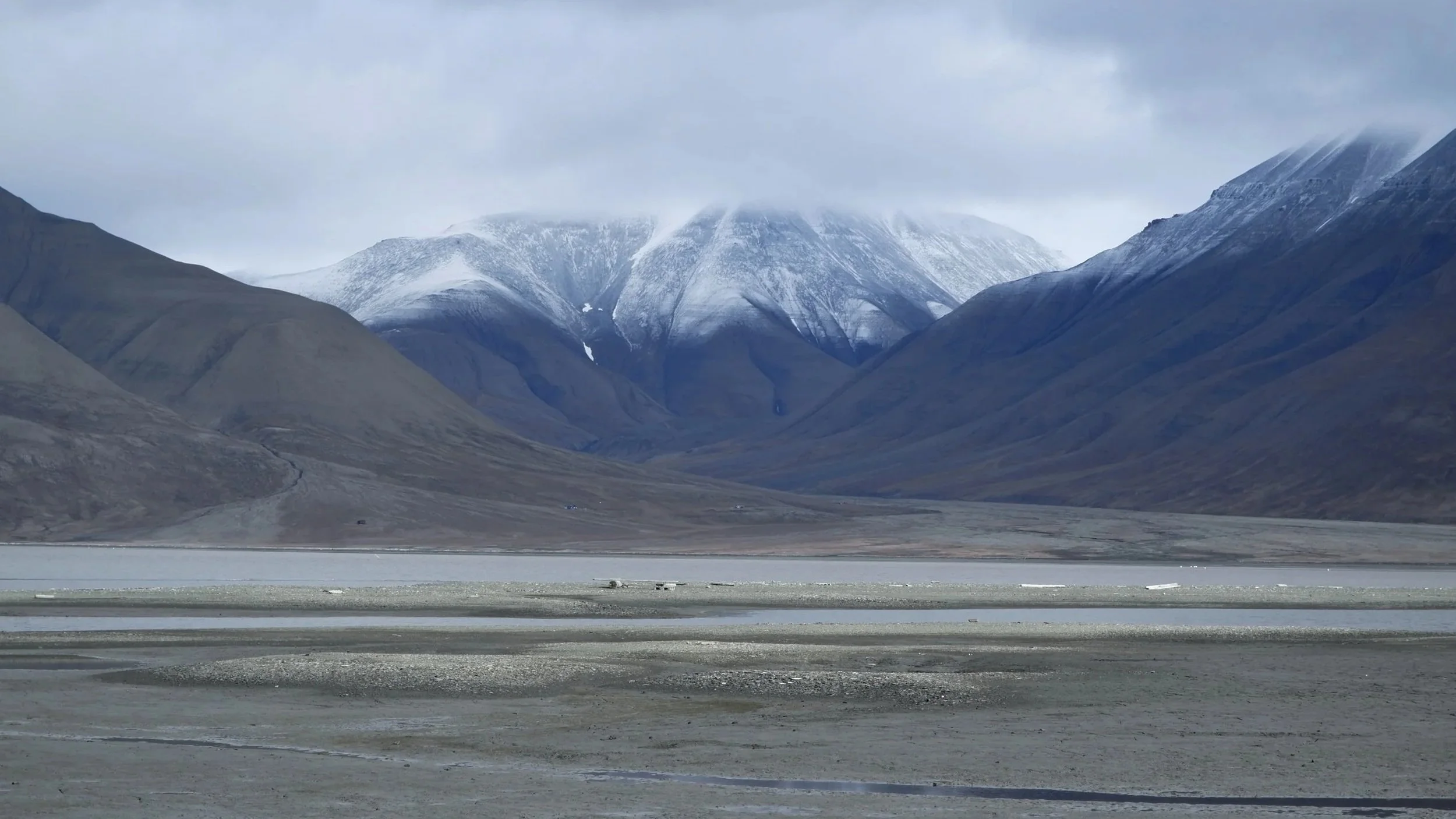
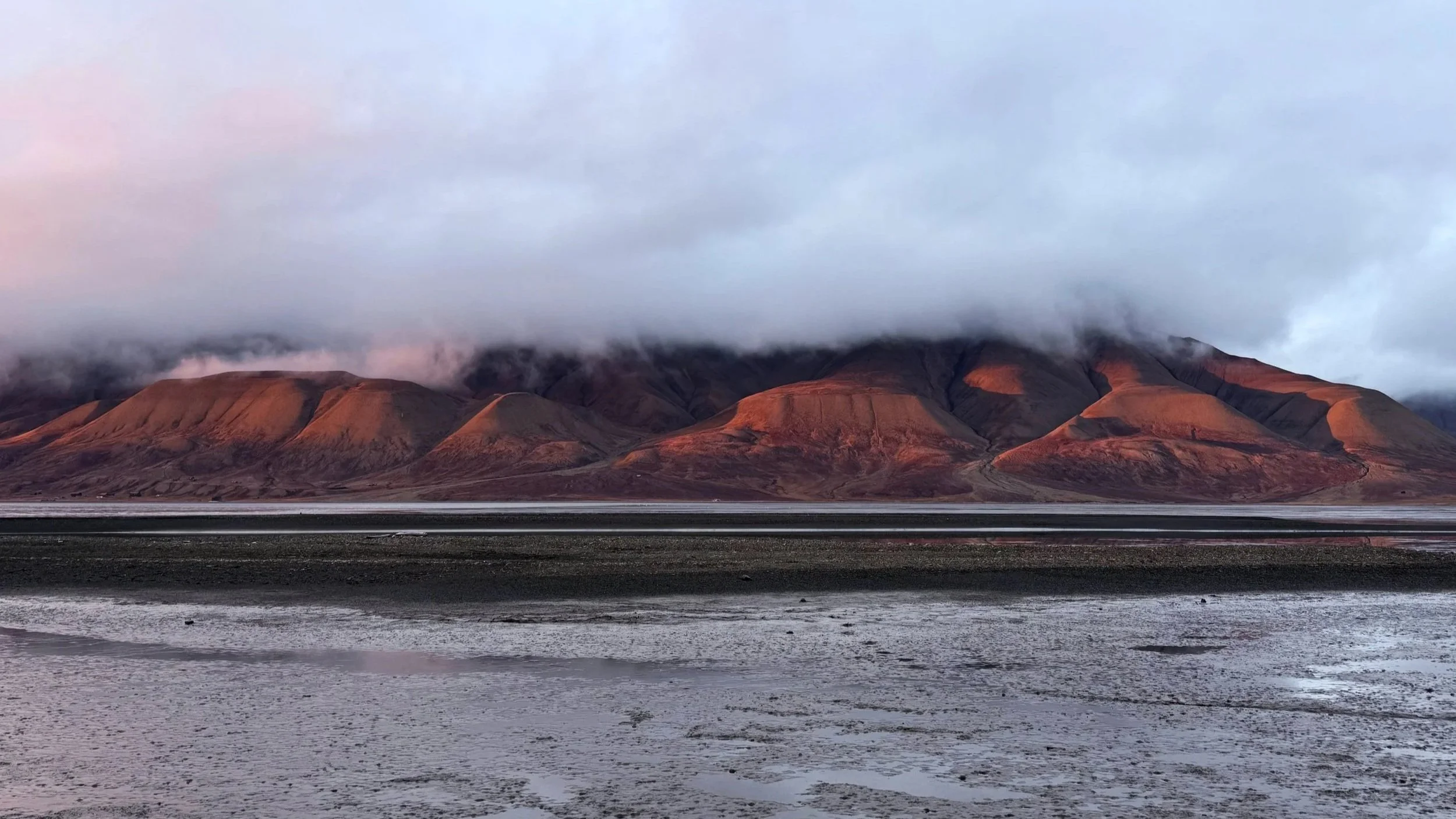
During the first few days in Longyearbyen, I was surprised by the changing light. Because of its boundless landscape (without trees), the sea and mountains in the same area presented very different layers of colour each day under fog, cloud, and sunlight. The midnight sun was not unbearable, and my body sensed the night gradually appearing and growing longer. From what I heard from local people, darkness also takes on varied forms during the polar nights. Nothing is unchangeable; I try to imagine living through a Longyearbyen winter, but my understanding of its light and darkness rests on an empirical knowledge that, in part, I haven't yet reached.
With the cruise ship MS Serenissima, we sailed towards the northwest part of Svalbard. The water shifted in colour from grey to blue and teal. One month after arriving at Longyearbyen, I first saw whales on the foggy sea. In Isfjorden, belugas slipped above and below the sea level; from afar, as we watched them, they looked like white snakes.
There are many animals inhabiting Svalbard, but whales are frequent protagonists in the narrative of the archipelago. After Willem Barentz arrived at Spitsbergen in 1596, the first Dutch whaling ships reached the northwestern coast of Spitsbergen in 1611. They later established the whaling station Smeerenburg (blubber town) on what they named Amsterdam Island, where blubber was boiled into oil to feed the growing European demand for fuel and lighting.
The whales have returned to these waters today. On our sailing towards 80°N, we saw several fin whales exhaling clouds of moisture. I could not stop recalling the steam trains, or the smoking chimneys connected to the blubber ovens; vestiges of the violent past have left imprints that still haunt my mind.
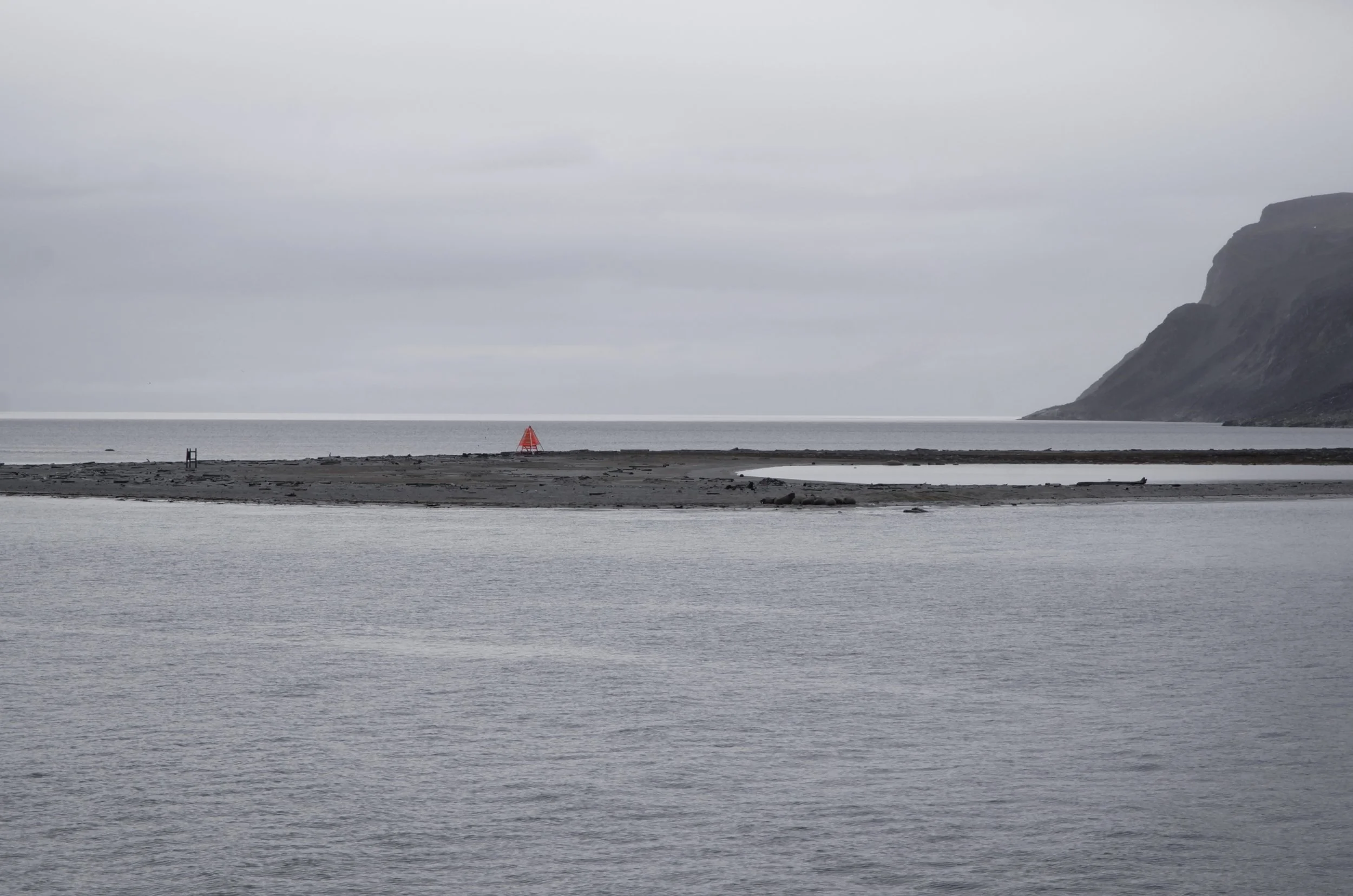
We passed by Smeerenburg, where the remains of the blubber ovens were barely visible from the ship. Along the shore, numerous walruses huddled together so tightly that it was difficult to tell whether they were actually a heap of rocks. Another whaling station in northwestern Svalbard, Magdalenefjorden, was first named Tusk Bay, after Willem Barentsz’s crew found walrus tusks there.
To name is to define an encounter and make it legible within a particular system of knowledge. It was also recorded that Dutch sailors once named a hill near Smeerenburg “Salaetbergh” (salad mountain), as edible scurvy grass grew there. In these names, the landscape is categorised through their use value and reduced into meanings that are comprehensible to humans.
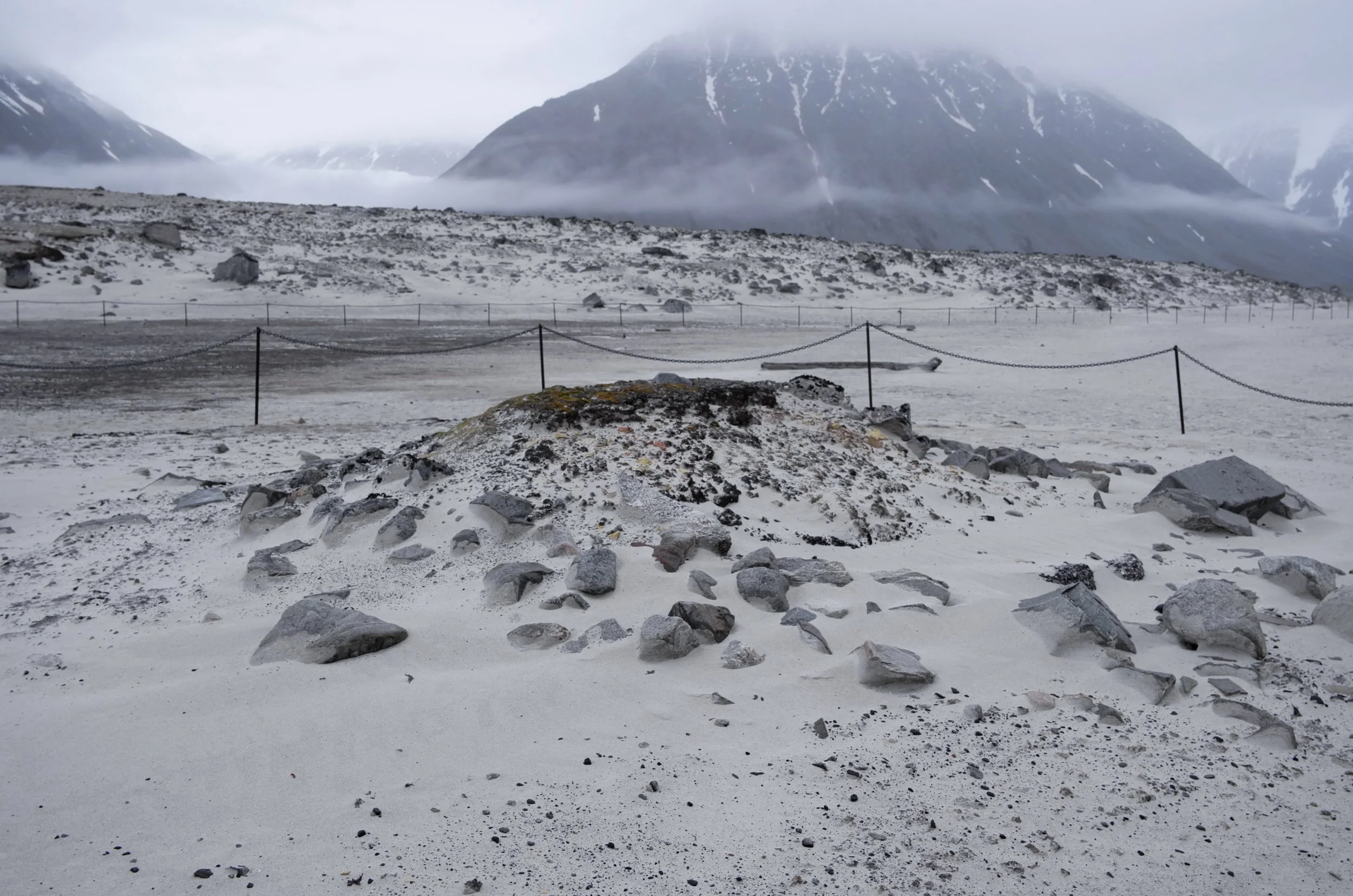
Whaling history has left the land with graves as well: historical accounts of Svalbard suggest that whalers suffered extensively from scurvy. Gravneset (grave point) and Likneset (corpse point) were built near the whaling stations, where whalers were buried in shallow graves and covered with cairns. Yet the Arctic permafrost and coastal erosion undo this preservation, pushing their coffins up through layers of soil. The material conditions of Svalbard seem to refuse to keep boundaries stable; the earth interrupts the human attempt to separate death from the surrounding matter.
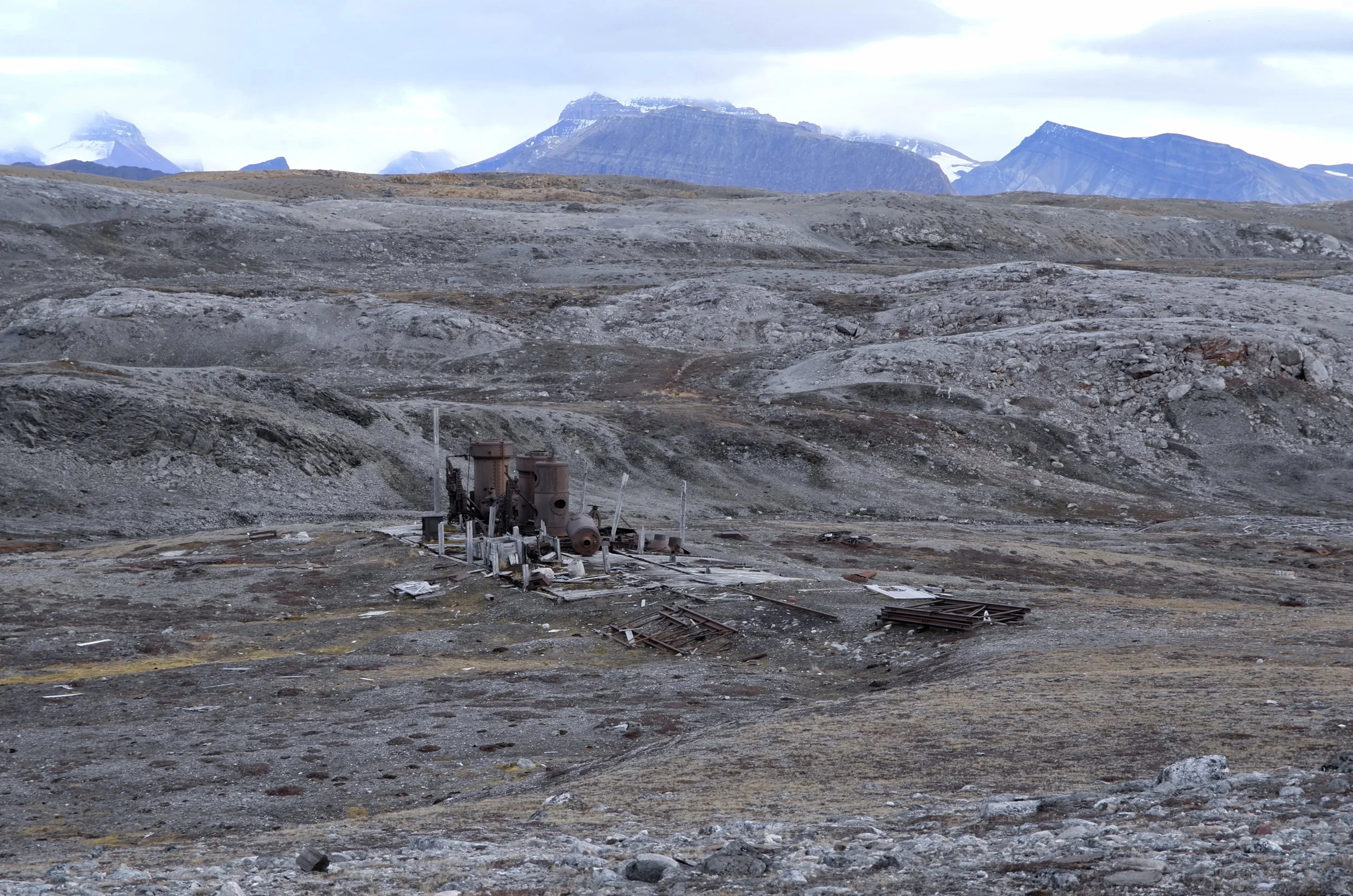
As I heard guides and locals in Svalbard say, it is sometimes not easy to recognise whether something on the ground is garbage or heritage. Extractive activities leave residues on the earth: rusty nails, drifting timbers, fragments of iron sheets. In Ny-London, an abandoned marble quarry, industrial remains still stand on the barren landscape, along with a sign inserted into the land by the English, declaring the Northern Exploration Company’s mining sovereignty.
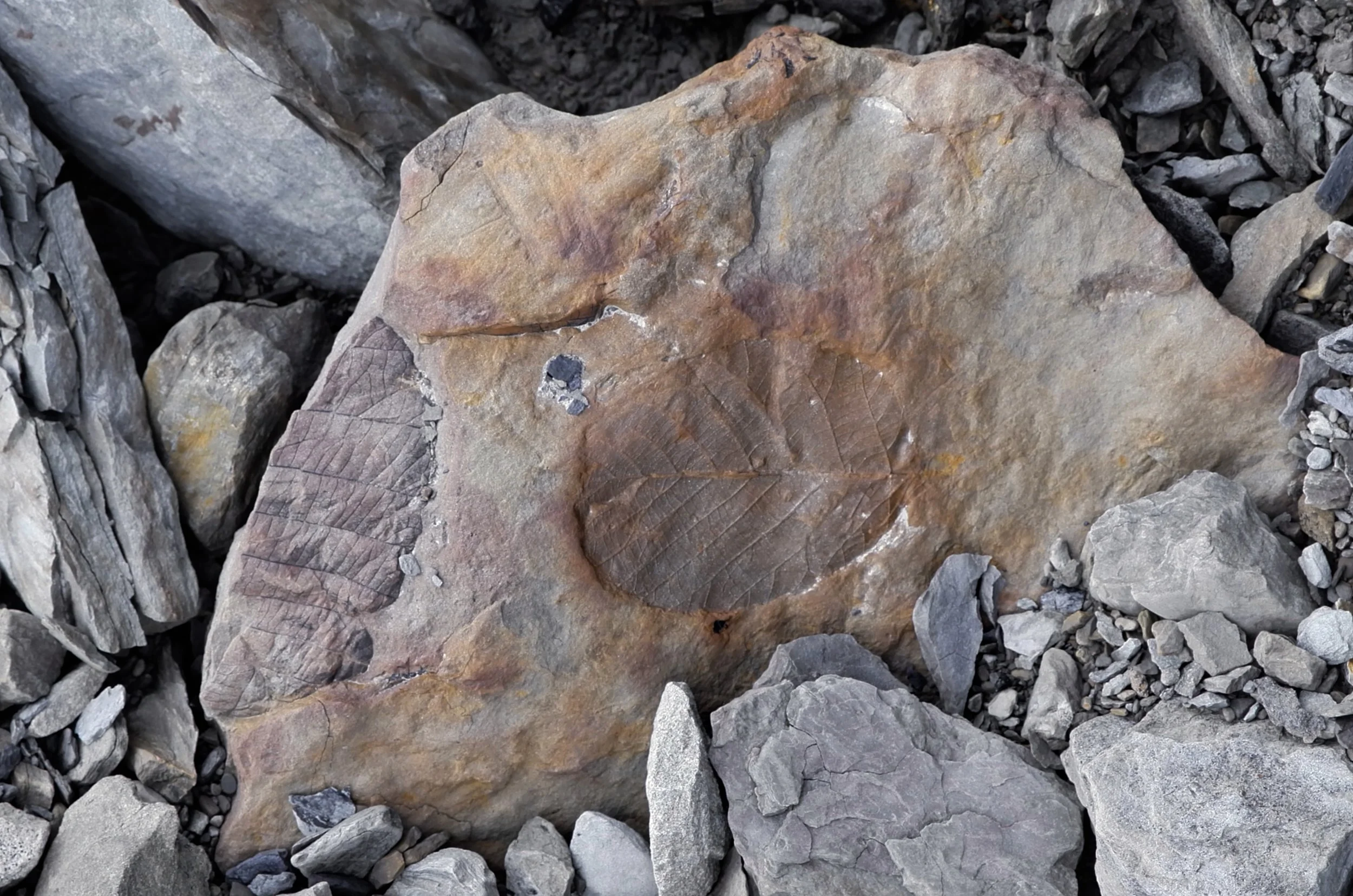
Back in Longyearbyen, we encounter piles of fossils in the mountains, which return me to another scale of knowing the world: geological time. Coal, extracted and burned as fossil fuel, is the similar substance that was once formed through the interaction of plant matter and solar energy, together with continuous geological changes. Its existence in the land exceeds any claim of ownership or statement of supremacy over other beings. And the fossil remains within the process of becoming: what appears solid is the result of compression, weathering, and transformation, and can itself break apart.