
Exploring Satellite Infrastructure on Platåberget
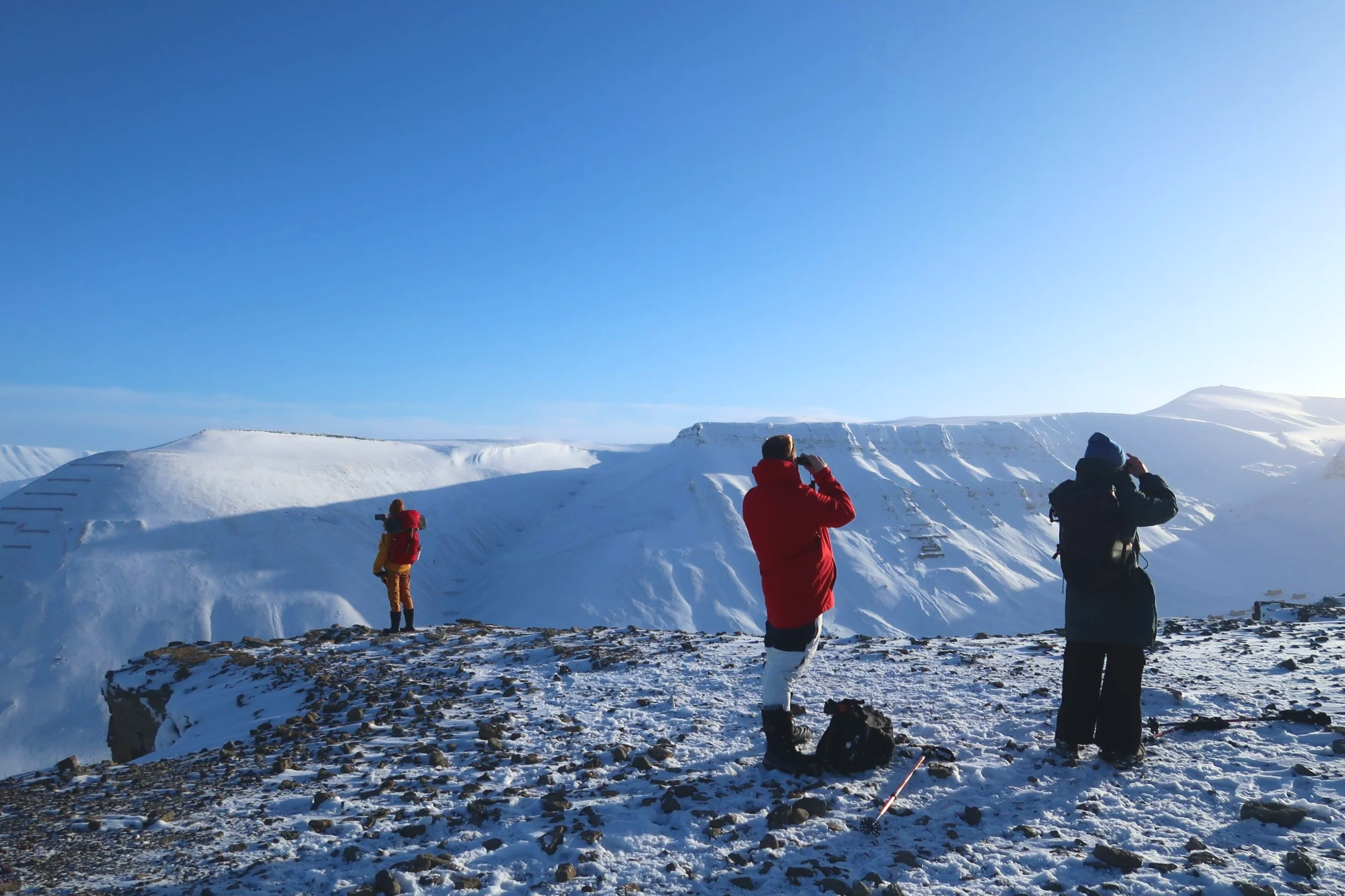
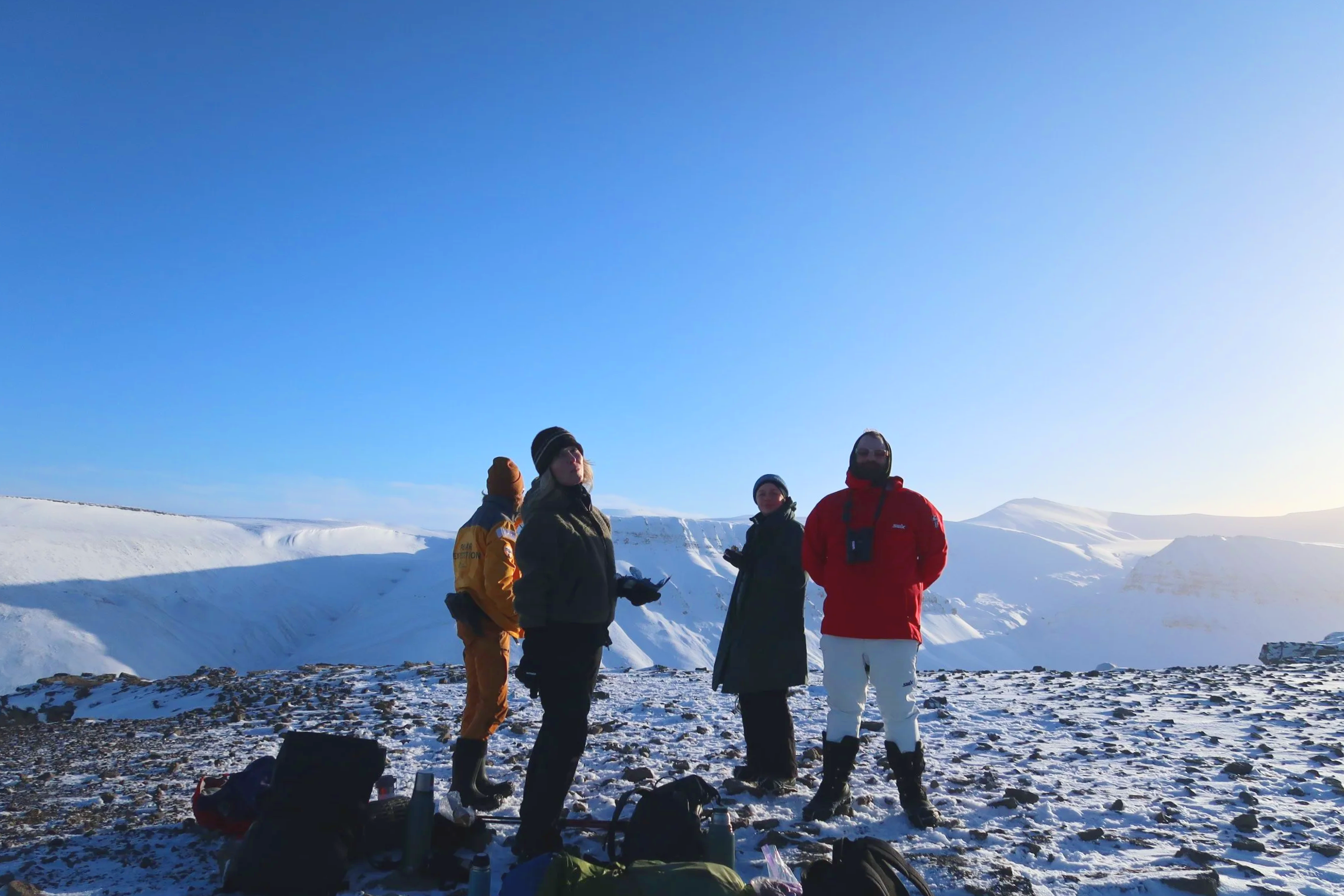
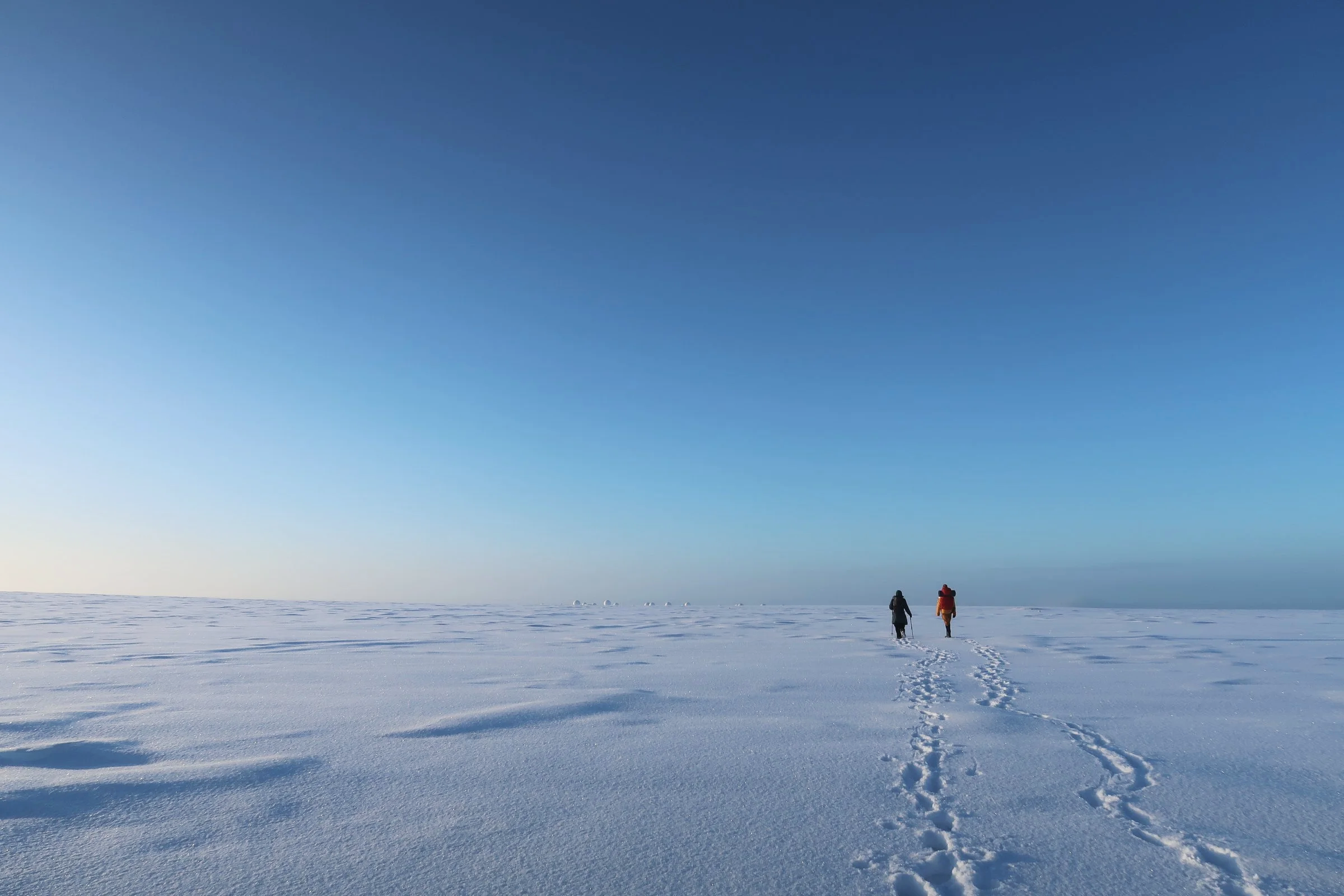
Last week, Residency Coordinator Sally Hovelsø led current residents Ashley Middleton, Thomas Abercromby, Mhairi Killin, and Lilian Kroth on a hike to Platåberget, a mountain rising 450–480 metres above Longyearbyen. The walk offered expansive views over Adventdalen and, notably, towards the satellite installations of Kongsberg Satellite Services (KSAT), located just outside the town.
The visit was initiated by Kroth, whose research explores the intersection of philosophy, science, and aesthetic practice, with a particular focus on Earth observation and remote sensing technologies. During her residency, she is developing the project Seeing Ice Like a Satellite, which examines how satellite imagery shapes contemporary understandings of glaciers and climate change.
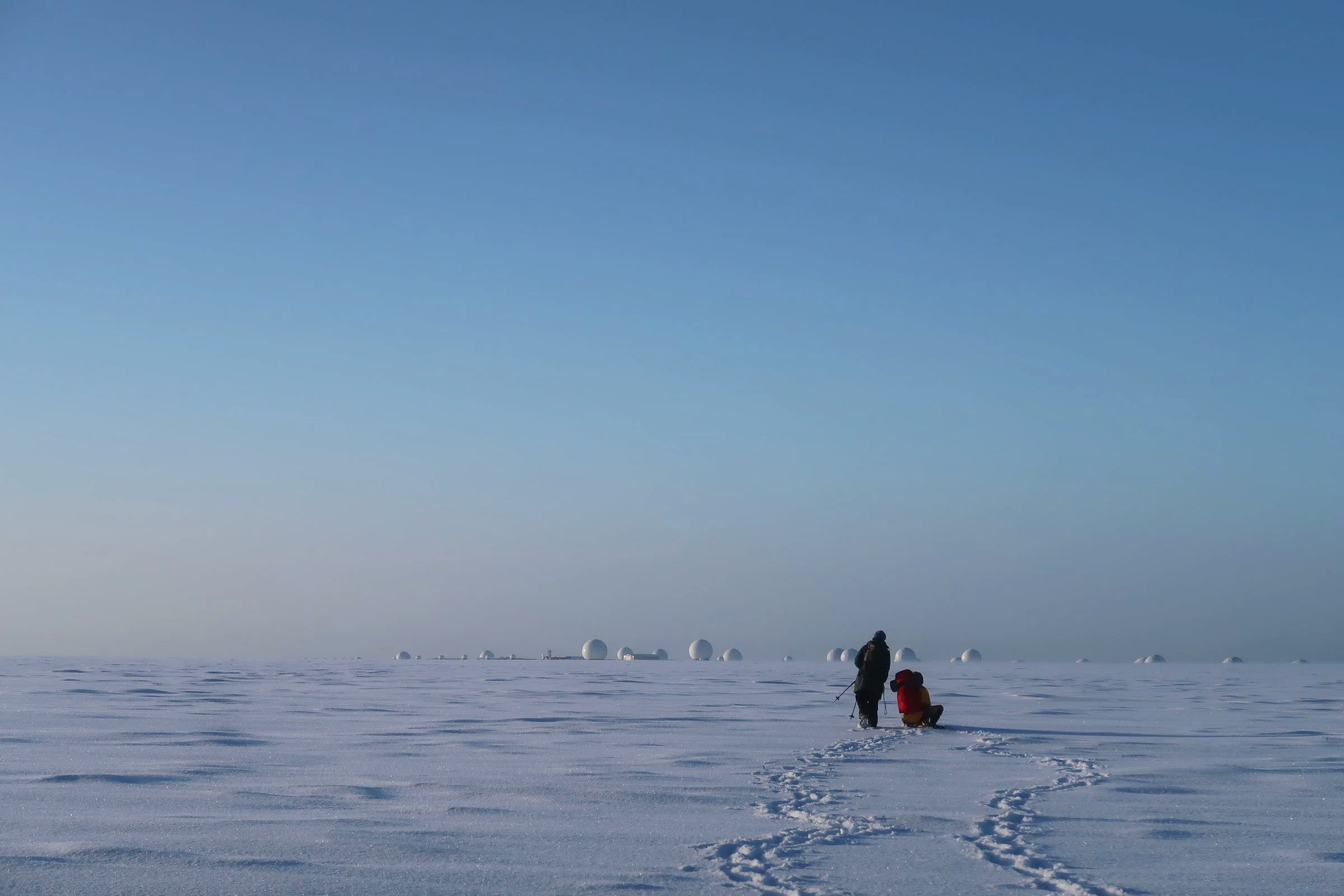
KSAT operates the world’s largest ground station for polar-orbiting satellites, forming part of a global infrastructure that enables the continuous collection and transmission of Earth observation data. Positioned in the High Arctic, Svalbard plays a crucial role in this network, offering unique orbital coverage that allows satellites to download data on every pass.
Reflecting on the experience, Kroth shared:
“Hiking to KSAT was a way of reaching a site where an immense amount of remote sensing data is gathered — a place that itself feels ‘remote.’ After several hours of walking across what resembled a desert plateau, the domes appeared, rising from the white landscape. We were fortunate that the day was calm and bright; visibility was clear, and we could sit in the silence surrounding the station while vast streams of data from passing satellites drifted down, collected and processed far above and below us.
The terrain of Svalbard functions as a crucial node in a global communication and data network, especially significant for monitoring fragile polar environments like its own. In regions like the Arctic, remote sensing has become a prime tool for gathering environmental information. Satellites, far from being mere points of light in orbit or mechanical bodies circling Earth, are active participants in a complex system of observation and exchange. They sustain a continuous feedback loop between sky and surface. The ceaseless transmission of signals descending to and ascending from Svalbard reveals how the interplay between ground and orbit shapes our understanding of icy landscapes and the planet more broadly.
Over the past months, I have been reflecting on the meaning of ‘ground truth,’ exploring its conceptual evolution in relation to the history of remote sensing since the 1960s, its philosophical implications, and artistic and scientific responses to the term. KSAT feels like a node of this thinking process: walking up there together, sitting quietly beside the domes, sensing the stillness, the remoteness, and the cold next to the inexhaustible flow of signals.”
This shared excursion forms part of Artica Svalbard’s ongoing approach to residency programming, supporting encounters that connect artistic research with the specific infrastructures, environments, and imaginaries of place.