
ARTICA WRITINGS 2025:
BENEATH THE SURFACE – DEEP-SEA MINING AND THE ARCTIC
As Norway advances plans to explore its Arctic seabed for mineral resources, deep-sea mining has become a focal point in wider debates about environmental ethics, geopolitical power, and the contradictions of the green transition. While formal exploration has been approved, political opposition has paused further licensing—placing the issue in a state of tense uncertainty, both nationally and globally.
Artica Writings 2025 brings together distinct voices to examine the consequences of this moment—locally, legally, morally, and ecologically. From research ethics to climate activism, ocean governance to political geography, this series asks what lies beneath the surface of our pursuit of rare minerals—and at what cost.

An Abyss of Uncertainty
Written by Espen Dyrnes Stabell, January 2026
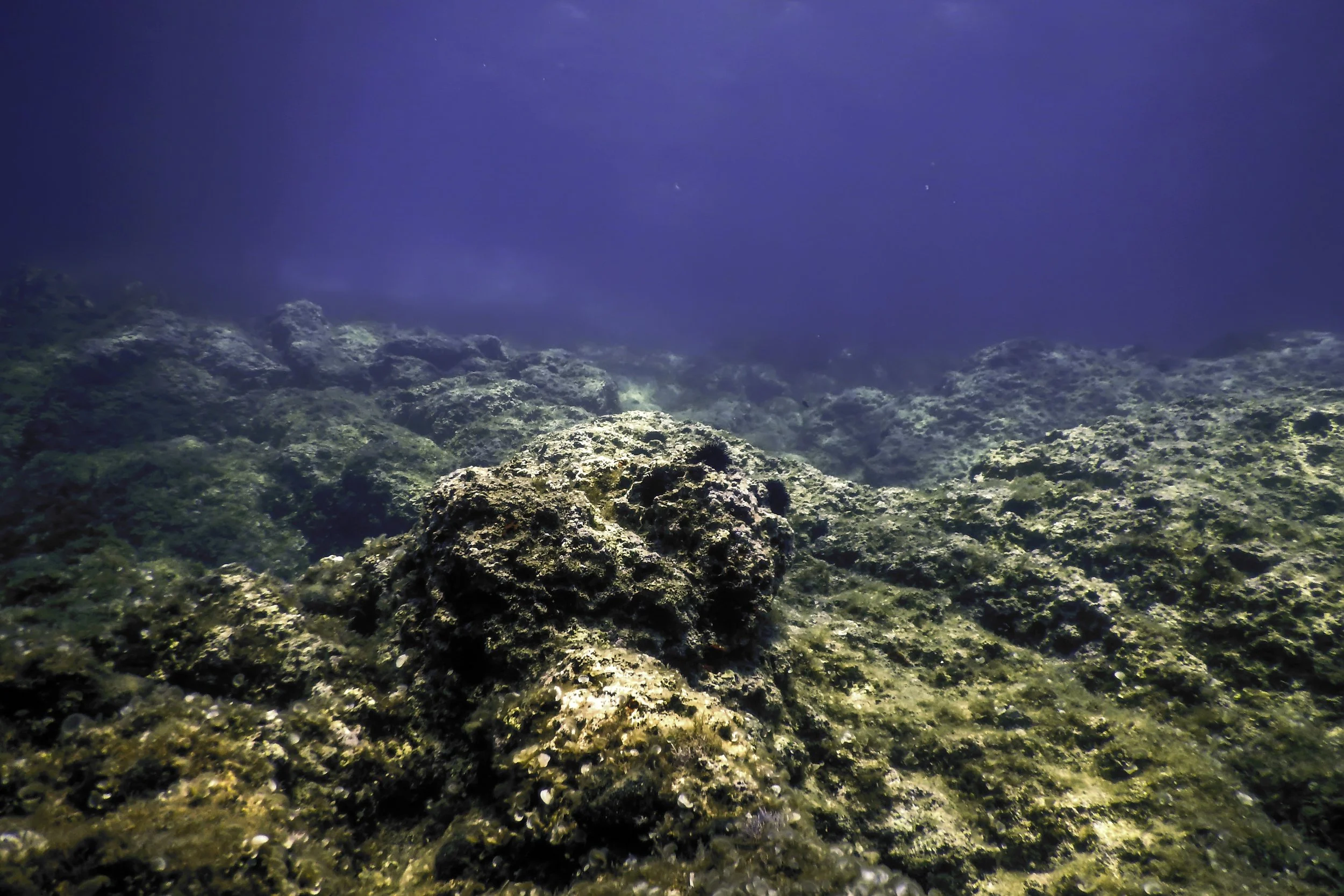
Should the Svalbard archipelago be opened to seabed mining? The question became relevant after the Norwegian government in 2024 opened up exploration for mineral development on 280,000 square kilometers of the seabed, including areas near the Svalbard archipelago. The government's decision has generated much discussion.

Engaging in the extractive future of Svalbard – A Manual
Written by Siri Granum Carson, October 2025
The prospect of deep-sea mining means potentially continuing the history of Svalbard as a centre for extraction of natural resources. At the same time, Svalbard is developing as a hub for the science of a rapidly changing world – both in the sense of the mounting climate and nature crises and in the sense of growing geopolitical unrest. Who should be involved in shaping the future of Svalbard? Should you, perhaps? How can we restructure the ongoing dialogue on deep-sea mining in a way that invites the participation of a wider register of stakeholders?

Unruly Bodies of Water
Written by Hanna Mortensdatter Vandeskog, August 2025
In October 2024, the Nordic Council passed a resolution which called for a moratorium on deep-sea mining (DSM). The vote took place just nine months after the Norwegian parliament’s decision to open vast stretches of its continental shelf to extraction. During the debate leading up to the vote, Greenlandic politician Mariane Paviasen Jensen announced that her delegation would not accept that Norway makes plans which leave impacts across the Nordic seas (Paviasen, 2024).