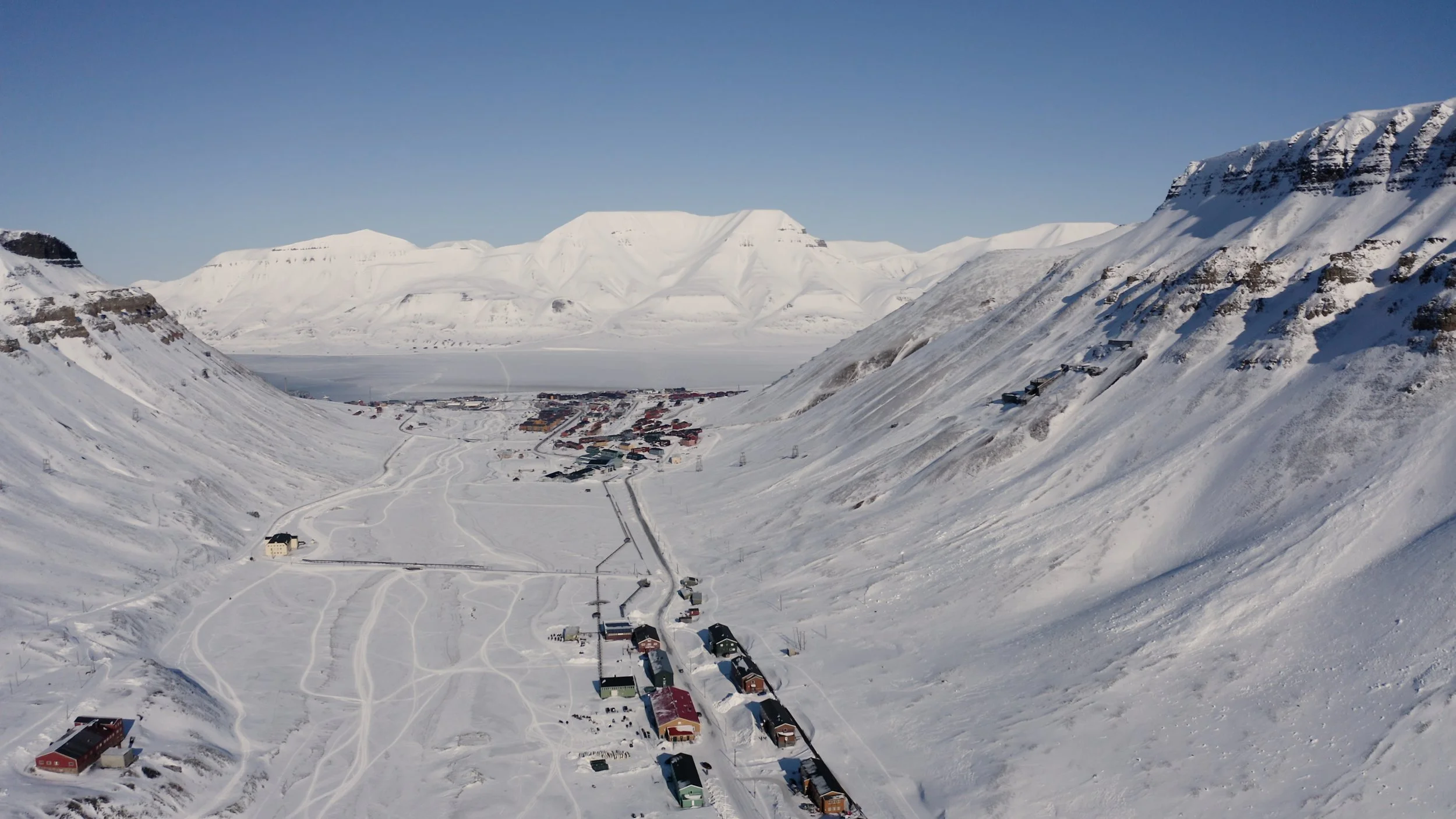
Artica Svalbard is one of Norway's leading non-profit arts and culture organisations. We facilitate artistic and cultural activities on Svalbard and support the development of Norwegian and international art and culture.
Based in Longyearbyen, Svalbard, we seek to raise awareness of the region and the wider Arctic through our various initiatives, including our Svalbard residency program for artists and writers.
OUR RESIDENCY PROGRAM
Through our residency programs, we offer a unique opportunity for artists, writers, and researchers to immerse themselves in the stunning and inspiring environment of Svalbard. Available through partnerships and independent funding, these residencies provide the time, space, and resources needed to focus on research and creative work.
LATEST NEWS
Artica Svalbard is pleased to announce that a new instalment of Field Notes, written by former residents Bianca Hisse and Christian Danielewitz, is now available to read.
Nominated for their residency by Office for Contemporary Art Norway (OCA), Hisse and Danielewitz spent Autumn 2025 in Longyearbyen undertaking a shared research project exploring the intertwined infrastructures of extraction, science, and geopolitics that shape the contemporary Arctic.
Artica Svalbard is pleased to announce the publication of the first essay in this year’s edition of Artica Writings 2025: Beneath the Surface – Deep-Sea Mining and the Arctic. The essay, titled Unruly Bodies of Water, is now live on our website.
In this timely and incisive piece, writer and researcher Hanna Mortensdatter Vandeskog examines the political, legal, and ecological tensions surrounding Norway’s decision to open parts of its continental shelf to deep-sea mining.
Artica Svalbard is featured as a key case study in Greening Artistic Residencies: Cultural Mobility Funding Guide 2025, a new publication from On the Move exploring how European residencies are adapting their practices in response to ecological and climate challenges.
Artica appears in Part 3: Case Studies. The guide highlights how Artica’s programme — shaped by its Arctic context and developed under the direction of Charlotte Hetherington — integrates sustainability into both operational decisions and artistic support.
In February and March 2026, artists Mhairi Killin and Floortje Zonneveld will be in residence at Artica Svalbard, developing From the Mouths of the Caves, Listening to Hear Another Island’s Song - a collaborative project exploring how knowledge travels across island environments through art, sound, language, and community.
The first lecture in the Lantern Lectures series is now available to watch.
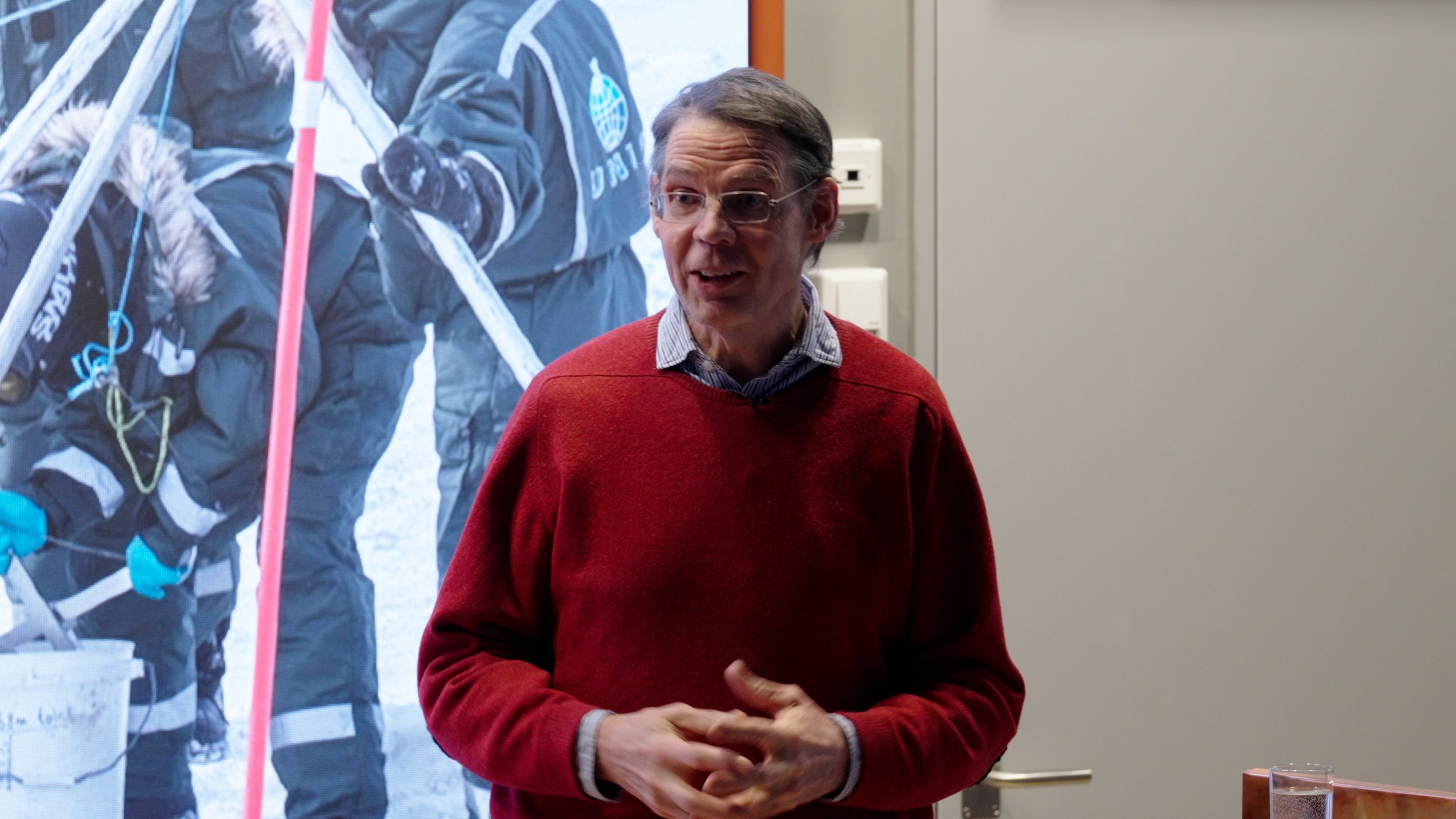
In this talk, Ine-Therese Pedersen, state meteorologist and Longyearbyen resident, reflects on how climate change is reshaping everyday life in Svalbard. Blending professional insight with personal observation, she offers a local perspective on how rising temperatures, shifting seasons, and changing weather patterns are felt in daily routines and in the landscape itself.
We are is pleased to welcome the final residents of 2025: Amy Hoagland, a sculptural installation artist based in Denver, and Kathy Sirico, a Brooklyn-based artist and poet working across painting, sculpture, textiles, and installation. Together, they join us in Longyearbyen to develop new work shaped by Svalbard’s polar night and the rapidly changing environment.
Artica Svalbard is pleased to announce a unique opportunity for artists working at the intersection of art, science, and ecology. In collaboration with the University Centre in Svalbard (UNIS), we will host a new Field-based Artist Residency embedded within ongoing biological research on Svalbard reindeer.
This residency places artists inside a living scientific environment — not as observers from the sidelines, but as collaborators who actively contribute to data collection and shared field observations.
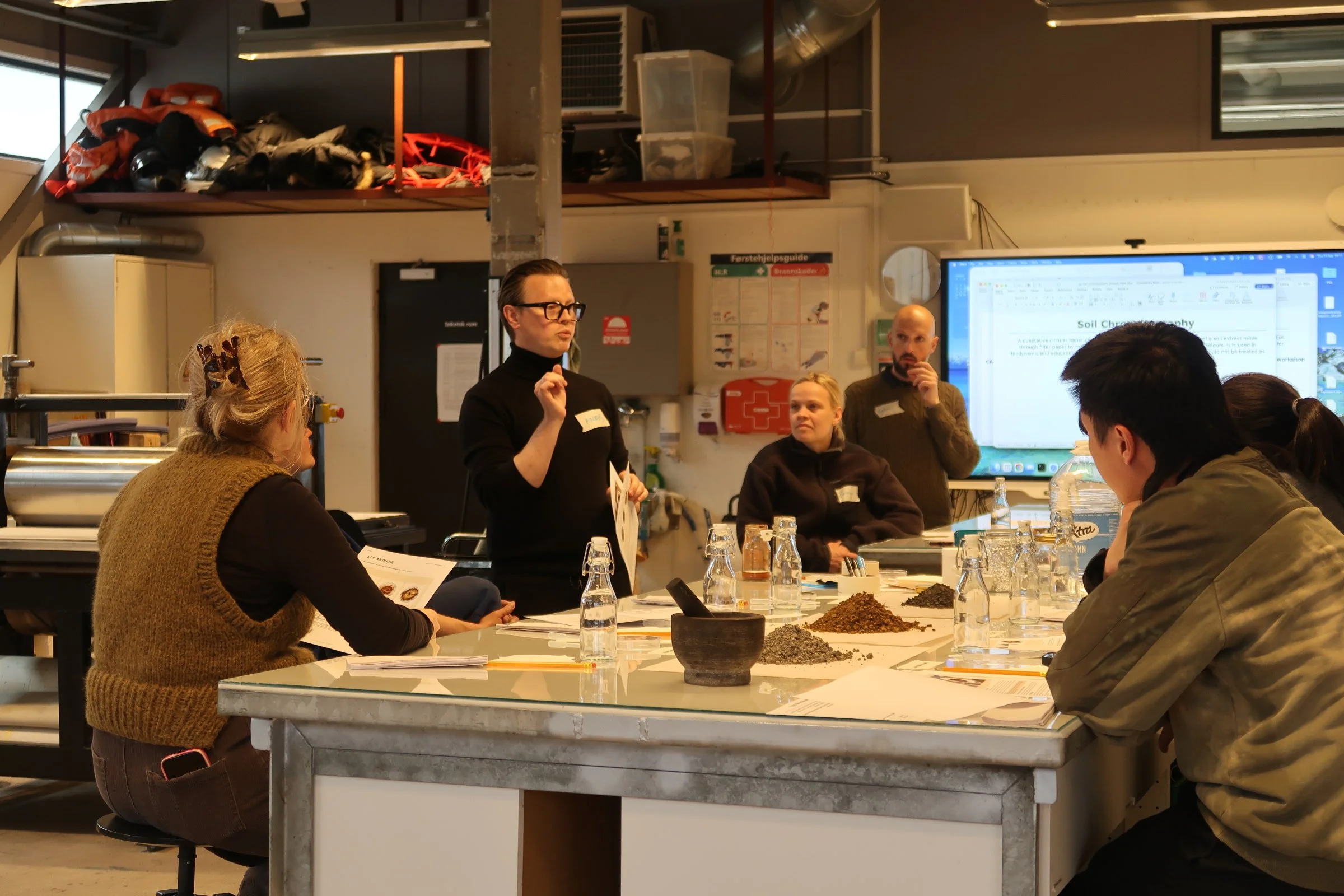
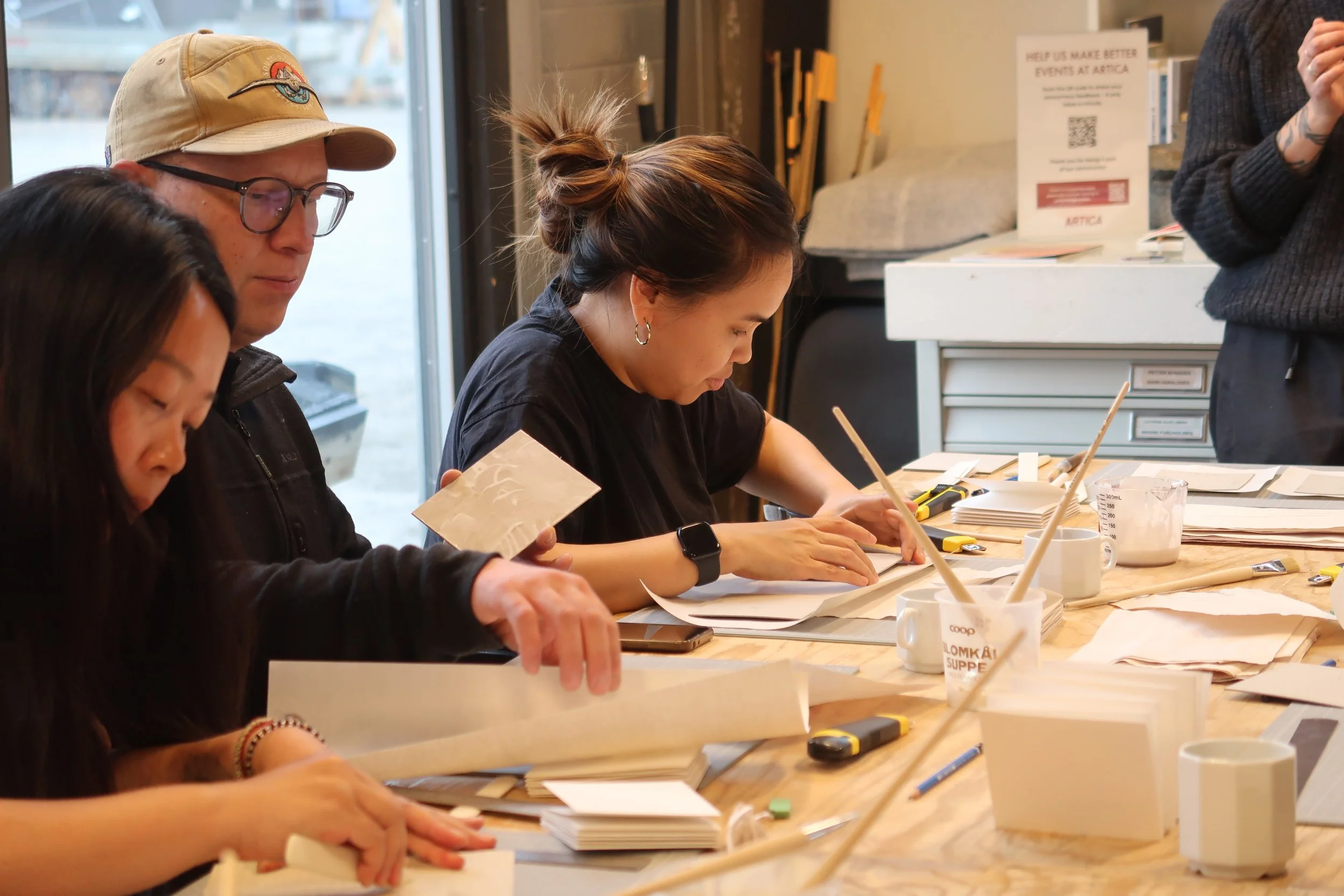
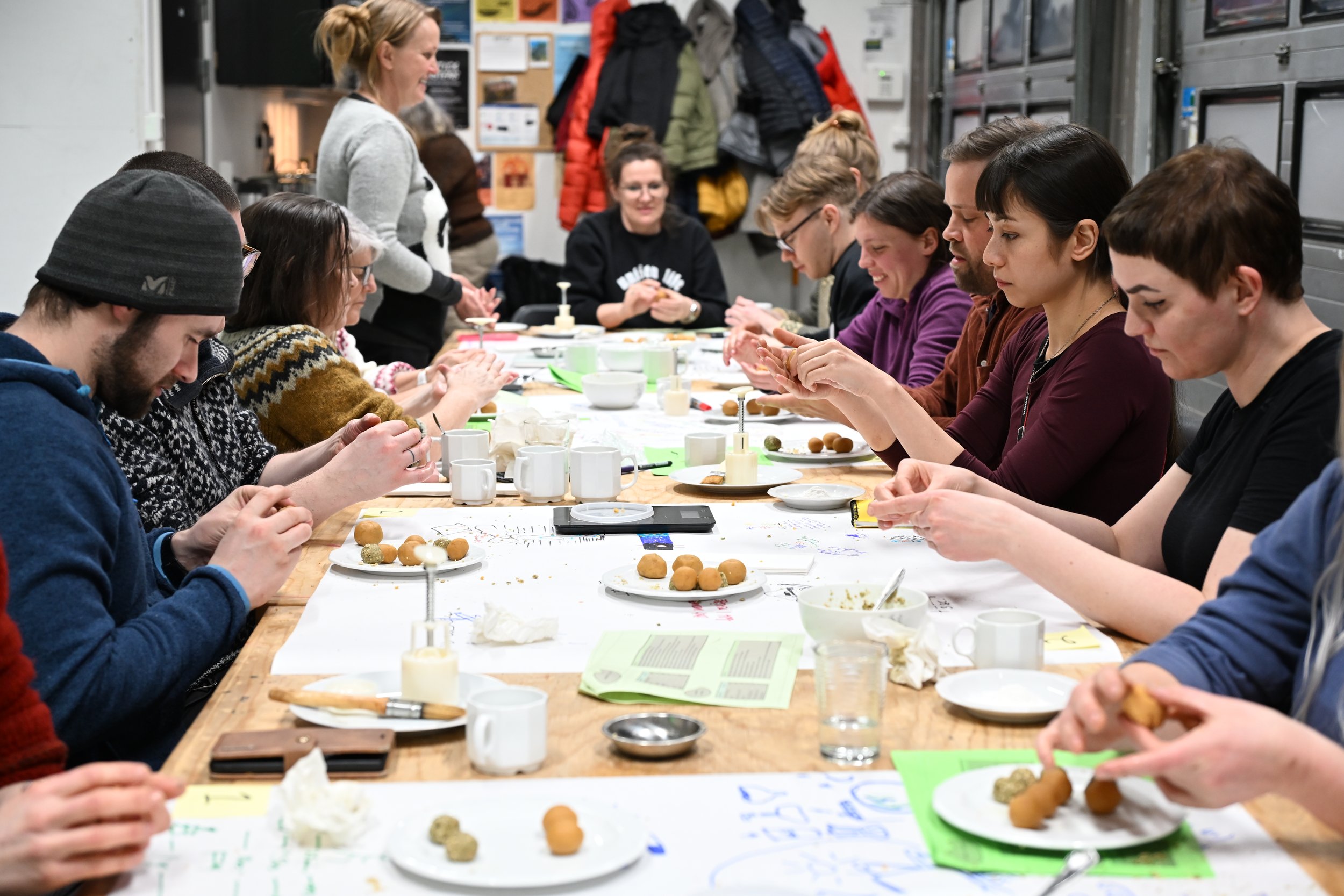
Artica Svalbard welcomed a full group of participants on Saturday 15 November for Printmaking with Natural Colour, a three-hour workshop led by Scottish artist, producer, and educator Emma Henderson. Across the morning, the studio was filled with the colours, textures, and subtle alchemy of natural materials as Emma introduced participants to the fundamentals of creating pigments and inks from plants and other organic sources.
Artica Svalbard is a founding organisation of NAARCA – the Nordic Alliance of Artists’ Residencies on Climate Action – and we are pleased to announce that applications for the 2026 NAARCA residencies are now open.
In 2026, NAARCA will support two funded residency exchanges taking place between March and November. Selected artists will receive a fee, a materials and equipment allowance, and a travel stipend.
During her October residency, childhood studies researcher Ragnhild Bjørnsen continued her ongoing work on how Longyearbyen’s unusually high turnover affects young people’s friendships, social relationships, and sense of belonging. Her research, grounded in psychological anthropology, focuses on children and youth living in highly mobile environments.
This month, Artica Svalbard is pleased to host Emma Henderson, an artist, producer, and arts educator based in the west of Scotland, as part of the Nordic Alliance of Artists’ Residencies on Climate Action (NAARCA) staff exchange programme. She joins us from Cove Park, a NAARCA partner residency located on Scotland’s west coast.
This dark season, Artica Svalbard is proud to announce the return of our Lantern Lectures series — and this year, we’re delighted to partner with Svalbard Museum to co-host the programme. Together, we’re reviving an old Arctic tradition of storytelling and community reflection, inspired by the 19th-century magic lantern lectures, which once brought people together to share knowledge through projected images, spoken word, and discussion.
This month, Artica Svalbard was pleased to host a series of fully booked creative writing workshops with French author and Artica resident Clara Arnaud. Across three evenings in Longyearbyen, participants gathered to explore new ways of storytelling rooted in the Arctic landscape, local history, and the boundaries between the human and more-than-human world.
We’re delighted to welcome American photographer and artist David Samuel Stern to Longyearbyen as our latest resident at Artica Svalbard. Stern is known for his deeply considered, craft-based approach to photography — a practice that explores the medium’s materiality and its relationship to portraiture, time, and place.
Artica Svalbard is pleased to share a new interview film featuring renowned artist Katie Paterson, created during her residency in Svalbard in 2025. The film offers a behind-the-scenes look at her recent project, True North — a photographic work developed using sunlight reflected off Arctic glaciers and satellite imagery captured from space.
Artica Svalbard and Nordnorsk Kunstmuseum (NNKM) are pleased to announce the artists nominated for Artica Svalbard’s residency programme in 2026: Apichaya (Piya) Wanthiang and Nora Adwan. During their stays in Longyearbyen, both artists will develop new work that responds to Svalbard’s environment and community, with time, space, and support to research, test, and share ideas.
This month we’re pleased to welcome researcher and writer Ragnhild Bjørnsen to Longyearbyen for her October residency with Artica Svalbard. Ragnhild was nominated by the Norwegian Non-Fiction Writers and Translators Association (NFFO) and brings a rich background in childhood studies and psychological anthropology.
Last Thursday, Artica Svalbard welcomed a full house for An Introduction to Lacto-Fermentation – a hands-on workshop led by fermentation enthusiast and historical archaeologist Anatolijs Venovcevs. Part of this year’s Smak Svalbard Festival, the event brought together over twenty participants eager to explore the microbial magic behind one of the world’s oldest food preservation methods.
We’re delighted to welcome back Clara Arnaud for her second residency with Artica Svalbard, following her initial stay in spring 2025. Clara is a French writer and winner of the Ecology Novel Prize in France. Her work—both fiction and non-fiction—explores ecological and political themes, often questioning how we inhabit and affect the living world.
Two prints by British artist Emma Stibbon RA have recently been acquired by the British Museum, London, adding to the institution’s collection of contemporary works on paper. Both works stem from Stibbon’s residency with us at Artica Svalbard, where she immersed herself in the Arctic landscape and its accelerating environmental changes.
This past weekend marked the opening of A-FI-SA. But it might not be tomorrow, the first major solo exhibition by artist and performer Maritea Dæhlin, now showing at Nordover Art Centre in Longyearbyen. Presented by Nordnorsk Kunstmuseum, the exhibition traces its beginnings to Dæhlin’s 2023 residency with Artica Svalbard.
Artica Svalbard and the Queen Sonja Print Award (QSPA) are delighted to announce the artists nominated for Artica Svalbard’s residency programme in 2026: Soghra Khurasani (India) and Todd Anderson (USA). Both artists will develop new print-based work in Longyearbyen, engaging with Svalbard’s cultural and environmental context and working in Artica’s print studio.
This year, Artica Writings returns with Beneath the Surface – Deep-Sea Mining and the Arctic.
As Norway advances plans to explore its Arctic seabed for mineral resources, deep-sea mining has become a focal point in wider debates about environmental ethics, geopolitical power, and the contradictions of the green transition. While formal exploration has been approved, political opposition has paused further licensing—placing the issue in a state of tense uncertainty, both nationally and globally.
This September, Artica Svalbard is delighted to welcome back artist Nastassja Simensky, who returns to Longyearbyen to continue work on her developing project Dust, Static and Feedback Loops. The project takes the form of a radio play and moving-image work that investigates Svalbard’s atmospheric infrastructure and the long-term legacies of environmental toxicity.
We are pleased to announce the artists selected for the 2026 Office for Contemporary Art Norway (OCA) nominated residencies at Artica Svalbard.
Following an open call that received over 1,200 expressions of interest, two collaborative duos have been selected to spend time in Longyearbyen in 2026 to develop projects grounded in artistic research, experimentation, and engagement with Svalbard’s social, ecological, and political context.
Artists Malin Arnell and Mar Fjell were in residence at Artica Svalbard from June to August 2025. They were nominated for the residency by Nordnorsk Kunstmuseum as part of Artica’s ongoing programme of invited artists and researchers.
During their stay, they spent time walking, recording, and observing in and around Longyearbyen, with a particular focus on the Longyearelva river and its surrounding landscape. Their engagement with Svalbard also included several extended hikes and a kayak-and-camping trip, offering opportunities to interact with the terrain over time and from different perspectives.
We’re delighted to welcome Janos Nieminen to Artica Svalbard for a research residency this month. Janos is a data scientist with a background in mathematics and theoretical philosophy, currently pursuing a PhD in philosophy with a focus on counterfactual reasoning. With 15 years of experience as a software developer, he bridges technical expertise with deep philosophical inquiry into the political and symbolic dimensions of state presence in fragile environments. Alongside his academic work, Janos is writing a non-fiction book about Svalbard that examines how countries such as Russia and China maintain influence in the Arctic through architecture, infrastructure, and everyday routines.
The Artica Writings series concludes with its sixth and final essay, featuring long-time resident Malte Jochmann. A trained geologist from Germany, Jochmann first came to Svalbard in 2001 as a student — the same year local democracy was introduced in Longyearbyen. Over two decades later, he reflects on how much the community has changed, and how recent policy shifts are shaping its future.
We are pleased to announce that the Norwegian Association of Nonfiction Writers and Translators (NFFO) has nominated Audun Aagre and Marit Beate Kasin for residencies at Artica Svalbard in 2026. Their nonfiction projects will explore pressing questions around nature, sovereignty, and our evolving relationship with the Arctic—each bringing a distinct voice and perspective to these themes.
We’re delighted to welcome Ashley Middleton to Artica Svalbard for a nine-month residency, supported by the American-Scandinavian Foundation.
Ashley is an artist and researcher whose work examines the evolving relationship between the body, technology, and the environment. Working across installation, sound, video, and photography, she creates immersive experiences that bring scientific inquiry into conversation with sensory perception.
OUR PUBLIC PROGRAM
Through our public program, we foster dialogue, collaboration, and cultural exchange between our residents and the local Svalbard community. Historically, Svalbard has been a place of extraction. Artica Svalbard aims to counteract this by encouraging residents to think about what they can leave behind. We encourage residents to host workshops, lectures, and community events open to the public. These activities challenge perspectives, inspire new thinking, and create meaningful connections.
ARTICA EVENTS
If you are curious about what Artica’s current residents are working on, join us for an evening of presentations and open studio with artists Amy Hoagland and Kathy Sirico. This informal gathering offers a chance to hear about their practices, learn how their projects are unfolding on Svalbard, and enjoy warm soup in good company.
Everything we know will one day disappear. We implicitly know this – we have developed systems and rituals to say goodbye – from waste management systems for our unwanted things to funerals for our beloved family members. Despite all this, we have set a goal that heritage – from archaeological sites to automatically protected buildings – should last forever.
(Lecture will be held in Norwegian)
How has growing up in the world’s northernmost community shaped Embla Abild’s political commitment? Embla grew up in the midst of a harsh Arctic climate, surrounded by darkness, avalanche risk, and polar bears—but also by warmth, community, and kindness. Svalbard is a society built on volunteerism, trust, and diversity, where people stand up for one another regardless of background, faith, or culture. It is a community she is proud and grateful to call home.
ARTICA WRITINGS 2025: BENEATH THE SURFACE - DEEP-SEA MINING AND THE ARCTIC
As Norway advances plans to explore its Arctic seabed for mineral resources, deep-sea mining has become a focal point in wider debates about environmental ethics, geopolitical power, and the contradictions of the green transition. While formal exploration has been approved, political opposition has paused further licensing—placing the issue in a state of tense uncertainty, both nationally and globally.
Artica Writings 2025 brings together distinct voices to examine the consequences of this moment—locally, legally, morally, and ecologically. From research ethics to climate activism, ocean governance to political geography, this series asks what lies beneath the surface of our pursuit of rare minerals—and at what cost.
About the Series
Artica Writings is an annual essay series that explores critical questions shaping the Arctic through interdisciplinary writing. This year’s edition, Beneath the Surface, will be published periodically in both Norwegian and English, and later released as a limited-edition book.
Written by Hanna Mortensdatter Vandeskog, August 2025
In October 2024, the Nordic Council passed a resolution which called for a moratorium on deep-sea mining (DSM). The vote took place just nine months after the Norwegian parliament’s decision to open vast stretches of its continental shelf to extraction. During the debate leading up to the vote, Greenlandic politician Mariane Paviasen Jensen announced that her delegation would not accept that Norway makes plans which leave impacts across the Nordic seas (Paviasen, 2024).
ARTICA BOOKS
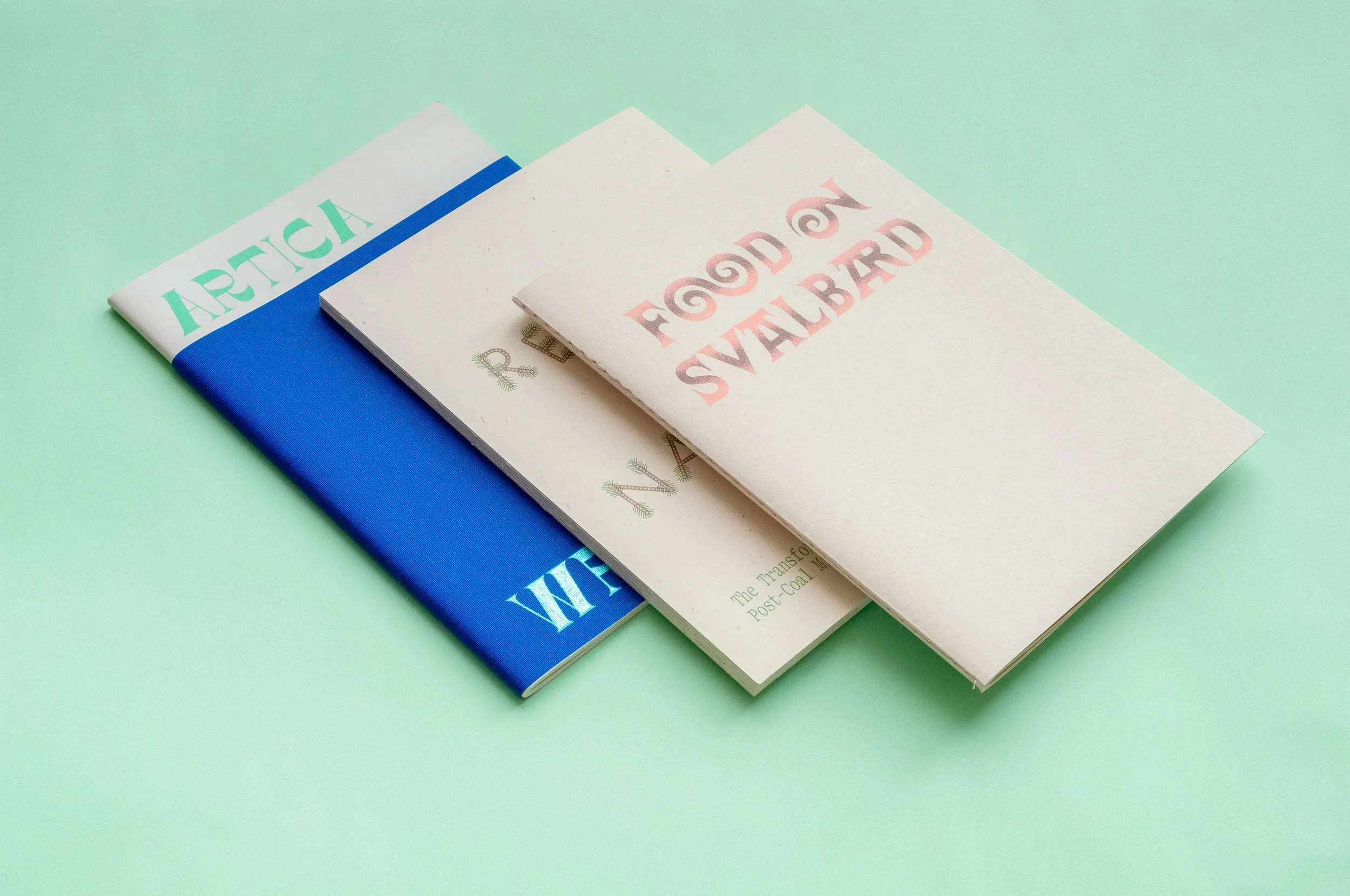
Our annual Artica Writings essay series is published in a limited edition book. Due to Svalbard's tax-free status, selling and shipping items from here can be complex, so offering our books for free (you only pay the cost of shipping) helps us avoid those issues.
If you're in Svalbard, you can purchase a copy for 100 NOK.
ARTICA FILMS
Artica Films is a selection of short films that document our activities; from interviews with residents discussing their work and experiences in Svalbard, to highlighting community engagement projects and more.
Recorded at Svalbard Museum - 13 November 2025
The climate in Svalbard is changing at an alarming pace — temperatures are rising, glaciers are retreating, and rainfall is replacing snow. In this talk, Ine-Therese Pedersen, state meteorologist and long-time resident of Svalbard, reflects on how these shifts are affecting daily life in the Arctic and what it means to live in a landscape that is visibly transforming.
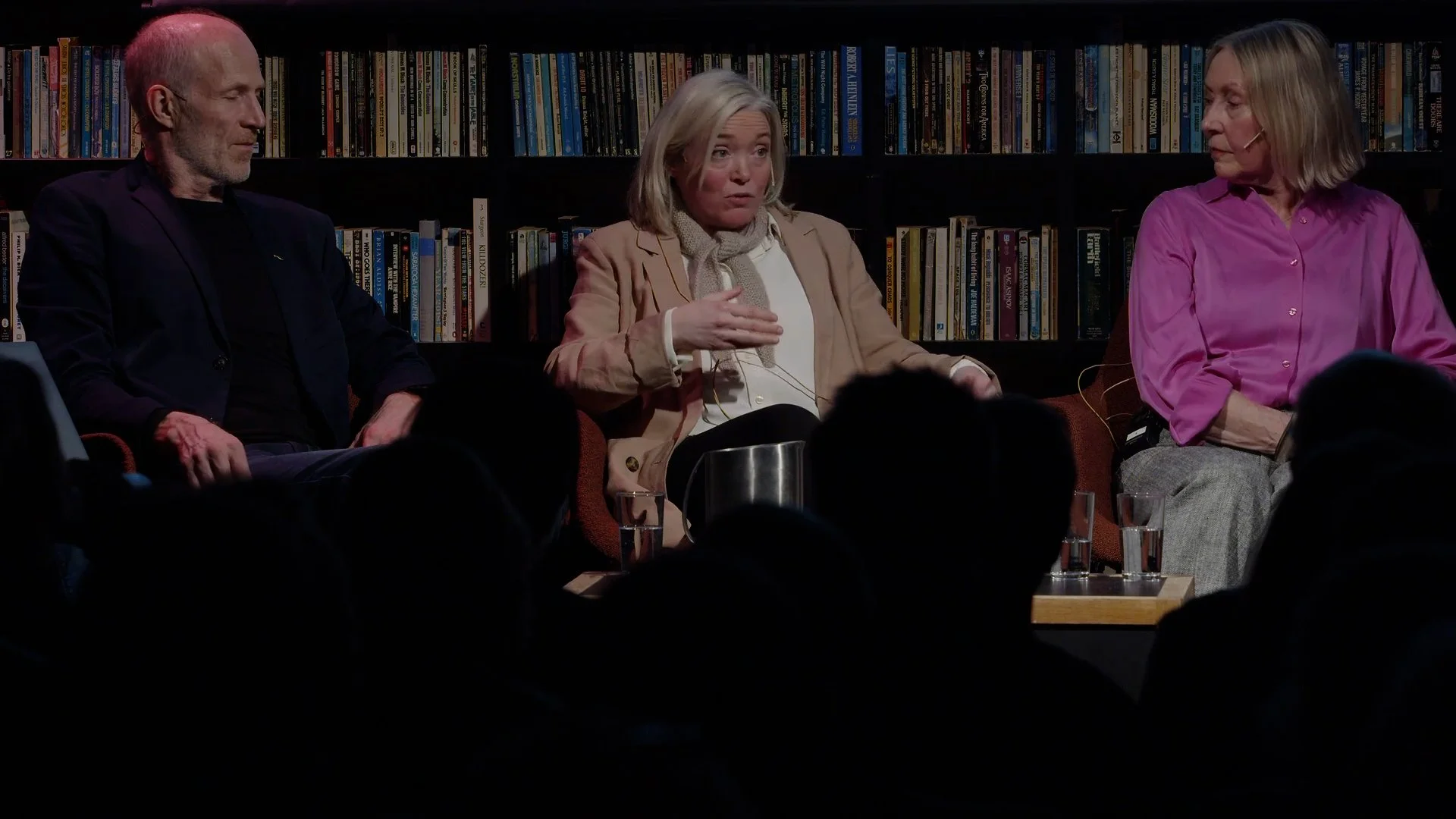
Recorded at Litteraturhuset, Oslo – 27 March 2025
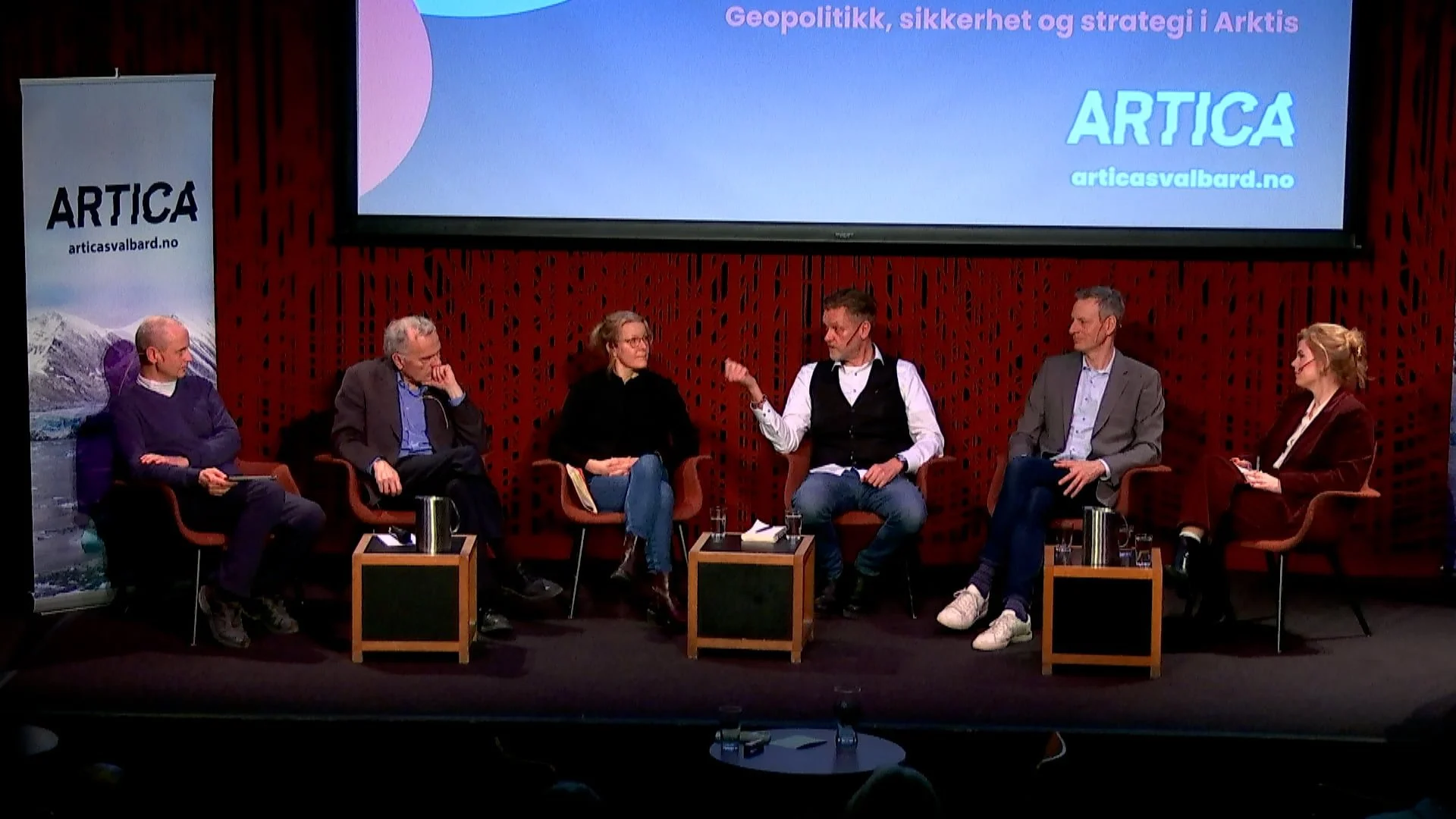
This panel event brings together leading voices in Arctic policy, international security, and geopolitical strategy to explore the shifting balance of power in the region—with a particular focus on Svalbard.
In the summer of 2022 we welcomed Spanish artist Inma Herrera to the Artica residency. In this new film Herrera, a visual artist living and working in Helsinki since 2014 shares her reflections on the residency experience, her practice and the meditative process of making.
In November 2021 Artica resident Jessica MacMillan presented Time Line, a one-of-a-kind short term public project which took place for the first time in Longyearbyen.
In October 2021, Artica hosted the project: The Slow Adventure, a collaborative between artist Floortje Zonneveld and the students of the Svalbard Folkehøgskole.
For Artica Listens 2021 Ignas Krunglevičius, created HARD BODY DYSPRAXIA, a sonic installation inside a disused coal power plant in Longyearbyen, Svalbard.
In April 2021 during Maja Lunde’s residency, Artica and Longyearbyen Library hosted an in conversation with Longyearbyen based writer and journalist Line Nagell Ylvisåker.
Norges selvbilde bygger i stor grad på at myndighetene anser seg selv som en «humanitær stormakt» og fredsmegler. Dette var sentralt i markedsføringen da Norge i sommer vant konkurransen om en plass i FNs sikkerhetsråd.
What should the future of Longyearbyen and Svalbard look like? And what will it take to get there? In the final part of Artica Listens 2020, we invited people to join us for a live conversation that linked the topics of the previous three parts.